
How AI Is Changing Digital Marketing.
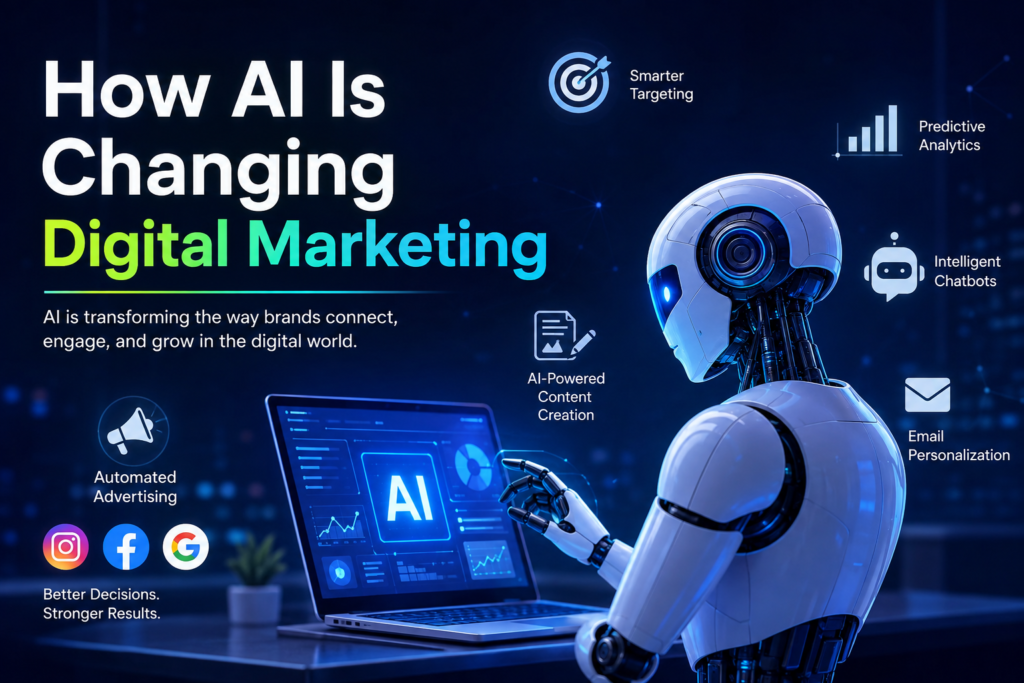
A few years ago, “AI in marketing” meant little more than a chatbot that answered the same three questions on a website. Today it touches almost every part of how brands find, understand, and talk to their customers. If you work in marketing, or you’re just curious about where things are heading, it’s worth taking a real look at what’s changed and what it means going forward.
From Guesswork to Real Insight
Marketing used to run on a mix of experience, gut feeling, and slow feedback loops. You’d launch a campaign, wait weeks for results, and adjust for next time. AI has compressed that cycle dramatically. Tools can now sift through massive amounts of customer data, purchase history, browsing habits, social activity, and spot patterns a human team would take months to notice.
This doesn’t mean marketers are being replaced by algorithms. It means the guesswork is shrinking. A small business owner can now see, almost in real time, which customers are likely to churn, which products are trending in a specific region, or which email subject lines actually get opened. That kind of visibility used to be reserved for companies with huge analytics teams.
Content Creation Has Sped Up, But Judgment Still Matters
One of the most visible shifts is in content production. Writing product descriptions, drafting ad copy, generating image variations, all of this can happen faster than ever. But speed isn’t the same as quality, and audiences can usually tell when content feels generic or hollow.
The marketers getting real value from these tools aren’t the ones hitting “generate” and publishing without a second look. They’re using AI to handle the repetitive first draft work, freeing up time to focus on strategy, storytelling, and the human details that actually build trust with an audience. A good headline still needs a person who understands the brand’s voice and the reader’s mood. The tools are faster hands, not better judgment.
Personalization at a Scale That Wasn't Possible Before
Think about the last time you got a marketing email that felt like it was written specifically for you, rather than blasted to a list of ten thousand people. That’s AI doing the heavy lifting behind the scenes. Recommendation engines, dynamic website content, and personalized ad targeting all rely on machine learning models that adjust based on individual behavior rather than broad demographic guesses.
This shift matters because customers have grown tired of generic marketing. They expect relevance. A streaming platform that recommends shows based on actual viewing habits, or an online store that shows products related to what you’ve already browsed, feels less like advertising and more like a helpful nudge. Brands that get this right build loyalty simply by being useful instead of intrusive.
Smarter Ad Spending
Paid advertising has also changed shape. Platforms like Google and Meta now use machine learning to automatically adjust bids, test creative variations, and find audiences most likely to convert. Marketers still set the strategy and budget, but a lot of the fine-tuning that used to require constant manual monitoring now happens automatically, and often more accurately than a person could manage across hundreds of variables.
This has lowered the barrier to entry for smaller businesses. You no longer need a dedicated media buying team to run a reasonably effective ad campaign. At the same time, it’s raised the bar for what “good” advertising looks like, since the baseline performance across the board has gone up.
Customer Service Has Become Part of the Marketing Conversation
Chatbots and virtual assistants get a lot of attention, and rightly so. A well-built AI assistant can answer common questions instantly, guide someone through a purchase decision, or hand off to a human when things get complicated. This isn’t just a support function anymore. It’s part of the customer’s overall impression of a brand, which makes it a marketing concern too.
The best implementations feel conversational rather than scripted. The weaker ones frustrate people by looping through unhelpful answers. The technology keeps improving, but the design and intent behind how it’s used still matters more than the tool itself.
What This Means Going Forward
None of this suggests marketing is becoming less human. If anything, the opposite is happening. As routine tasks get automated, the value of genuine creativity, emotional intelligence, and cultural awareness goes up, not down. Audiences can spot a soulless, templated campaign from a mile away, and that instinct isn’t going anywhere.
The marketers who’ll do well in this environment are the ones who treat AI as a set of tools that handle scale and repetition, while they focus on the parts that actually require a human perspective: understanding what a customer feels, not just what they click.
Final Thoughts
AI hasn’t replaced digital marketing, it’s reshaped it. Data moves faster, personalization runs deeper, and routine work takes less time. But the fundamentals haven’t changed much at all. People still respond to brands that understand them, tell honest stories, and show up consistently. The tools are new. What makes marketing actually work hasn’t changed nearly as much as the headlines suggest.