
Complete Beginner in Digital Marketing – Where Should I Start?
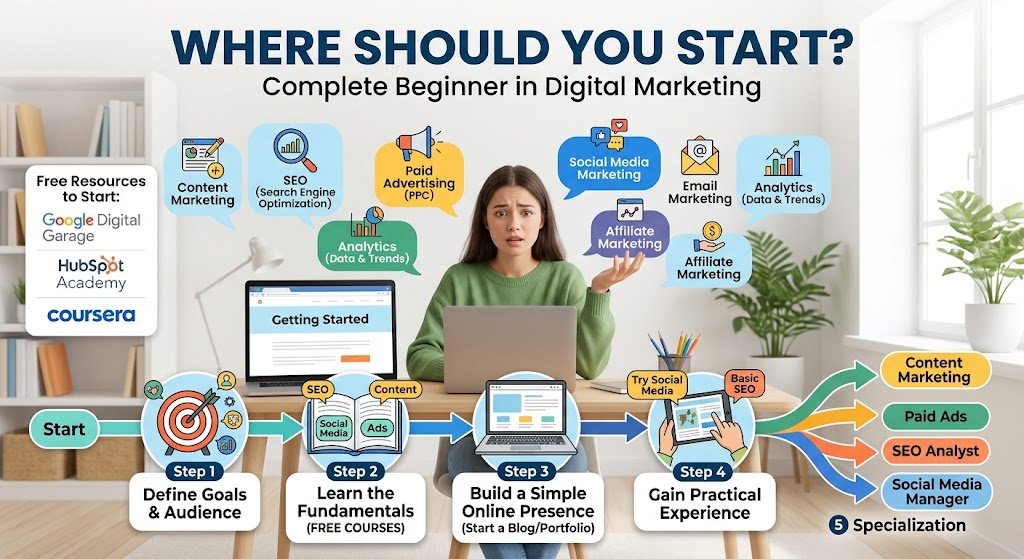
If you’ve typed “how to learn digital marketing” into Google and ended up with forty open tabs, a dozen contradicting opinions, and zero clarity, you’re not alone. This is probably the most common feeling for anyone starting out. The field looks huge from the outside: SEO, social media, email, ads, analytics, c
First, Understand What Digital Marketing Actually Is
Strip away the jargon and digital marketing is just this: getting the right message in front of the right people online, then measuring whether it worked. That’s it. Every channel, every tool, every strategy exists to serve that one idea.
Once that clicks, the rest becomes a lot less intimidating. You’re not trying to master ten separate skills. You’re learning different ways to do the same basic job.
Start With the Foundations, Not the Shiny Stuff
New learners often jump straight into paid ads or fancy automation tools because that’s what gets talked about the most online. That’s usually a mistake. Build your base first.
Learn how websites work, at a basic level. You don’t need to code, but understanding what a landing page is, how a website loads, and what makes one page perform better than another will make everything else easier to learn later.
Pick One Channel and Go Deep
This is the part most beginners get wrong. They try to learn SEO, social media marketing, email marketing, and paid advertising all in the same month. The result is that they know a little about everything and nothing well enough to actually use it.
Pick one channel. Just one. Some good starting points:
- Search Engine Optimization (SEO) if you enjoy research, writing, and long-term thinking.
- Social Media Marketing if you like creativity, trends, and quick feedback loops.
- Email Marketing if you want something simple, direct, and surprisingly effective for beginners.
Spend a month or two just on that one area. Read about it, practice it on a small project, maybe your own blog or a friend’s small business page. Real practice teaches you far more than reading ever will.
Learn the Tools, But Don't Obsess Over Them
Yes, there are tools for almost everything: keyword research, scheduling posts, tracking website visits, building landing pages. Free versions exist for most of them, and that’s plenty when you’re starting out. Google Analytics, Google Search Console, Canva, and Mailchimp’s free plan will cover a huge amount of your early learning.
The mistake to avoid here is thinking tools will teach you strategy. They won’t. A tool just shows you data or helps you execute an idea. The thinking still has to come from you.
Get Comfortable With Numbers
This part surprises a lot of beginners, especially people coming from creative backgrounds. Digital marketing runs on numbers. Click rates, open rates, conversion rates, bounce rates. You don’t need to be a data analyst, but you do need to get comfortable looking at a dashboard and asking, “what does this actually tell me?”
Start small. Track one metric for a project you’re working on, even something as basic as how many people visited a page you wrote. Watching numbers change over time is one of the fastest ways to actually understand marketing, rather than just reading about it.
Build Something, Even If It's Small
You don’t need a client or a job to start learning by doing. Start a blog. Run a small Instagram page about a hobby. Write a weekly newsletter to five friends. It doesn’t matter how small the project is. What matters is that you’re applying what you learn instead of just consuming more content about it.
This is also the fastest way to build a portfolio. When you eventually apply for a role or take on a client, having even one small, real project to talk about puts you ahead of people who’ve only read about marketing.